
I do lights. Not that often, but that's what I'm (reasonably?) good at.
Projection is alien to me, a dark (or bright?) art form that is used to great effect in professional shows but never looks great in any small scale amateur productions I've seen.
I think one of the reasons for this is the propensity to assume you have to project onto a screen, which then ends up a boring flat changing backdrop that tries to emulate a painted cloth whilst simultaneously being lower quality, poorer colour, and dim grey in a blackout.
I was asked to support this method in two productions recently - a pantomime and an adult pantomime - and both looked, well, a bit rubbish compared to painted sets and cloths. The colours were washed out, any stage lighting hitting the projection screen (which is designed as a high gain surface) instantly obliterated any projected content leaving a harsh white backdrop and removing any depth or backlight effect.
Compared to a painted set, this looks terrible.

Everyone thinks that small-scale theatre is easier, but actually small venues have a number of problems that make projection harder that larger theatre spaces don't struggle with;
- Cheap projectors. Good (bright) projectors are expensive, affordable projectors are usually designed for offices or home cinema and aren't bright enough to compete with stage lighting.
- Limited width. The cast are usually right at the stage edge. Side light is your friend when projecting, the stage and wings here are too small for most side light to work effectively.
- Limited depth. Distance between the screen and the actors helps (if you don't need to light upstage next to the screen then you can keep light off it easily), but when you only have a depth of 5m to play with you end up with actors almost against the surface.
One of the ways to improve contrast in projection is to use a grey screen, which we unfortunately didn't have access to, but for another show in the same venue (using the same projectors) we were a little more adventurous and tried projecting onto black serge flats. Yes, black, a material designed to absorb light and the result was, surprisingly, rather fantastic.

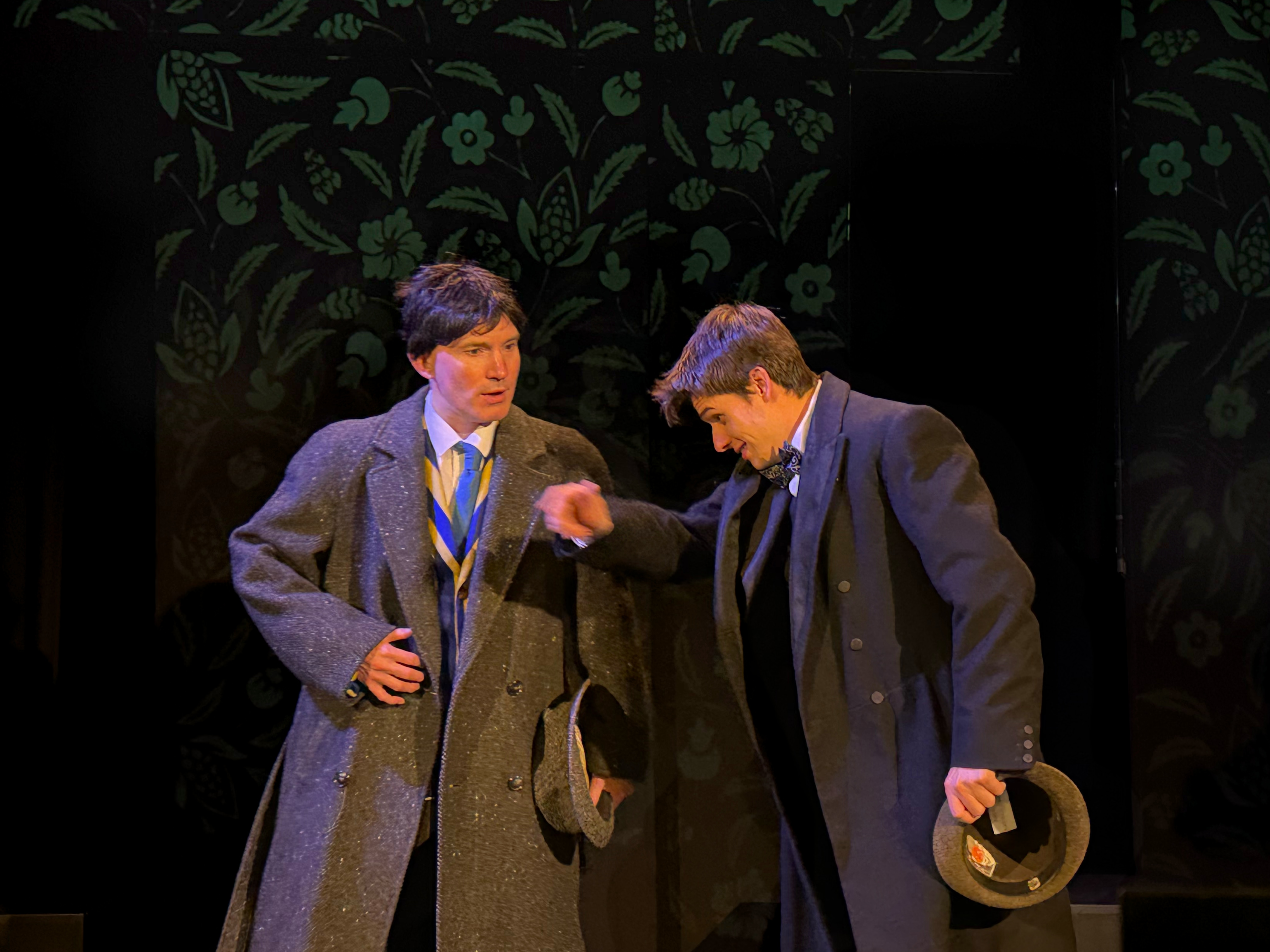
Here, we see projection adding texture to an abstract and irregular surface of flats, they became part of the production in a way 'actors performing in front of a cinema screen' can't (we also backlit them at times, and suggested a window with LED tape)
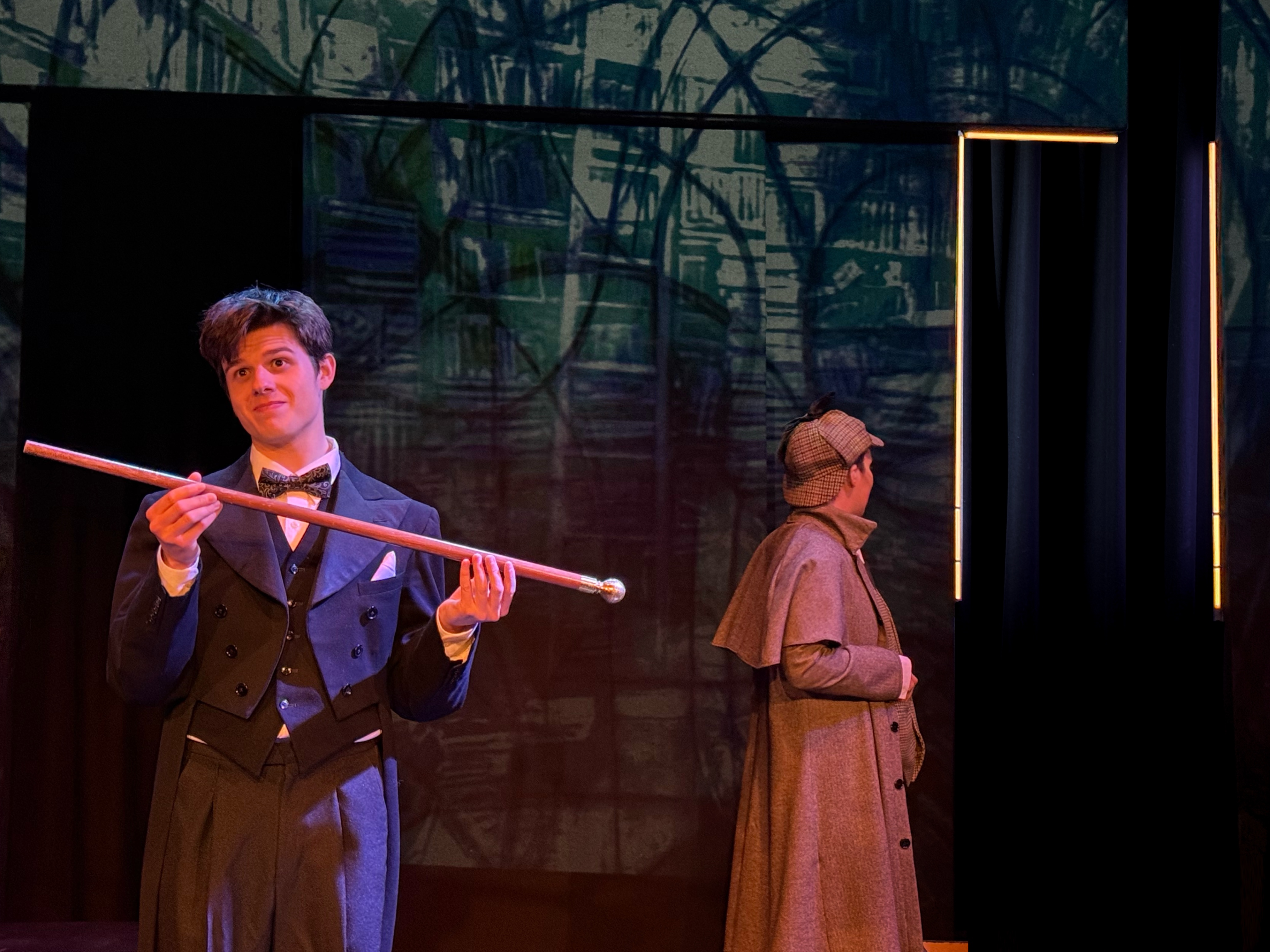
The overall visual effect was very different.
So, experiment! Don't assume you should project onto a screen - if you're showing a movie, absolutely, but if you're wanting to use projection to enhance a piece of theatre then consider different surfaces, materials, shapes, texture etc.
I've got an upcoming show where the plan is to use wooden pallets painted grey as my projection surface, and I can't wait to see how it looks.